What is the advantage of the Seated Dip compared to other dip machines?
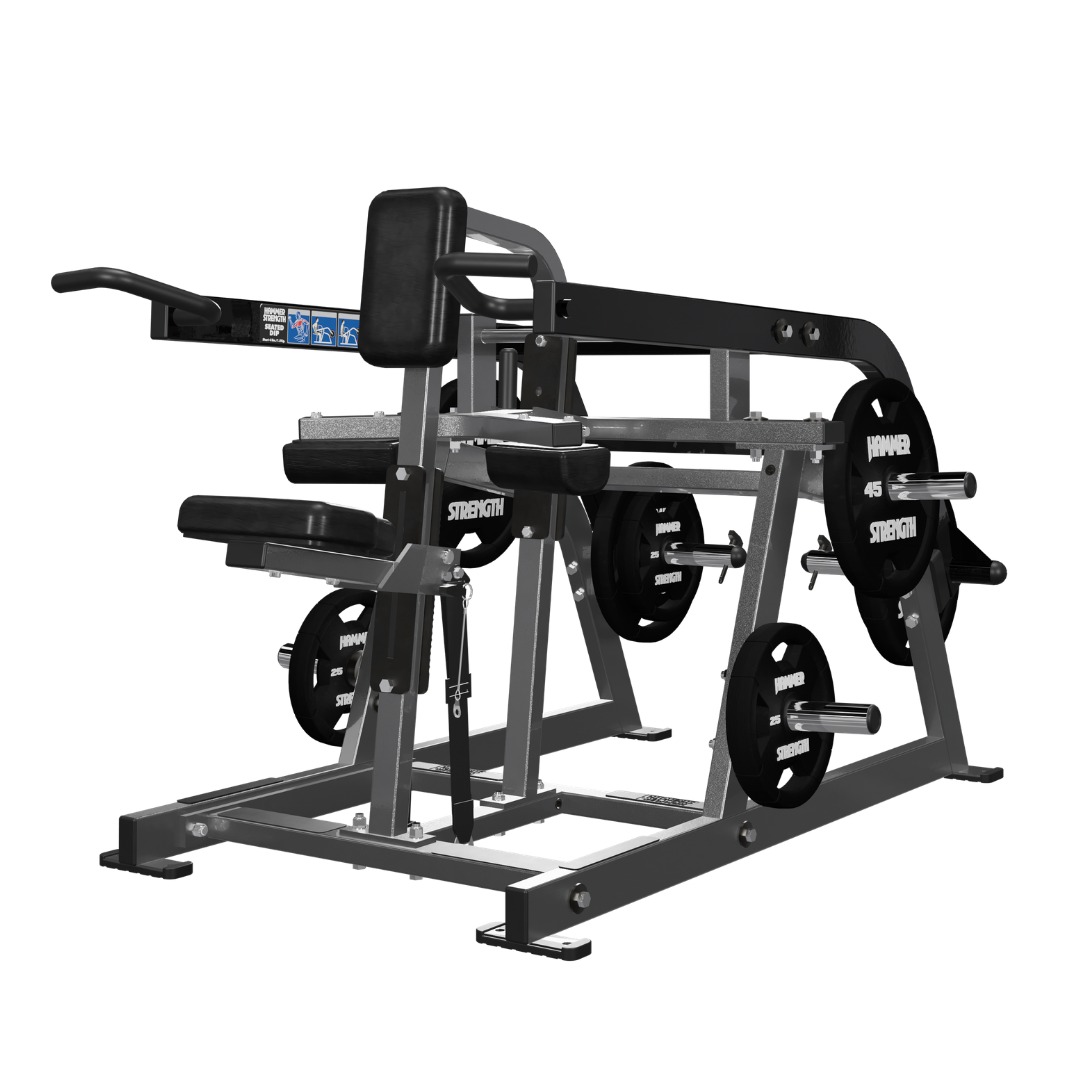
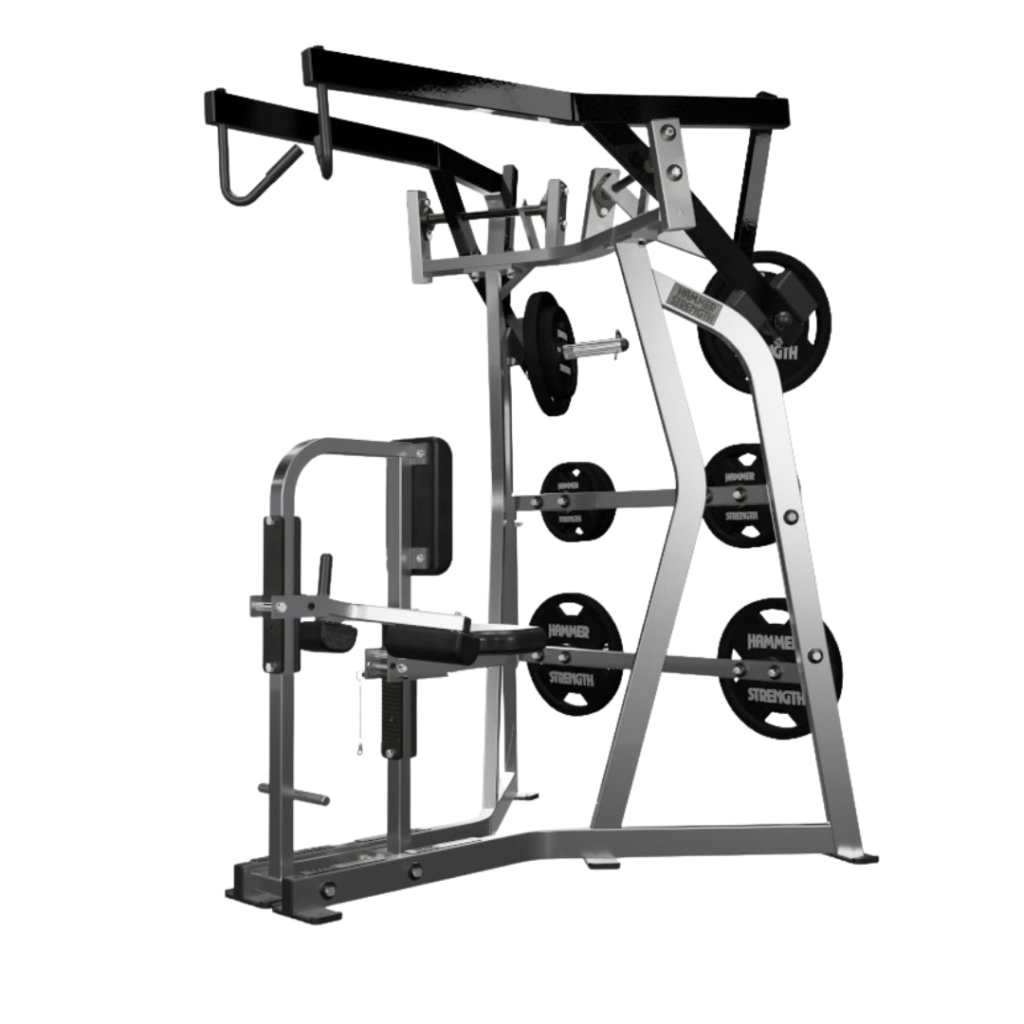
The Plate Loaded Seated Dip offers a more stable seated position with adjustable thigh restraints or a seat belt for better stabilization during heavy lifts. This design helps you focus solely on the movement, maximizing your pressing power.
What muscles does the Plate Loaded Seated Dip target?
The Hammer Strength Seated Dip primarily targets the triceps, making it an excellent choice for building upper-arm strength and size. It also engages the chest and shoulders, particularly the lower pecs and anterior deltoids, as secondary muscles.
Why is the starting resistance so low on the Hammer Strength Seated Dip?
The low starting resistance makes it ideal for users at all levels, especially beginners. It allows you to build strength progressively while maintaining control during the exercise.
Can the athlete perform face-in or face-out dips on the Plate Loaded Seated Dip?
Yes, the Seated Dip allows for both face-in and face-out positions, providing versatility for different training preferences. However, the face-in position is particularly recommended because the handles are ergonomically positioned to promote a more natural grip and movement pattern, reducing strain on the wrists and shoulders. Additionally, the face-in orientation includes the thigh hold pad, which stabilizes the body during heavy lifts, ensuring precise, controlled reps.