What is the difference between a seated and standing lateral raise?
The Seated Lateral Raise offers superior stability by minimizing body movement, enabling precise and controlled shoulder targeting. In contrast, the Standing Lateral Raise engages additional stabilizing muscles, including the core, but may involve momentum if not executed correctly. The Seated Lateral Raise is perfect for isolating the shoulders, while the Standing Lateral Raise provides functional, full-body engagement.
How does the lateral raise improve athletic performance?
The Hammer Strength Plate Loaded Lateral Raise strengthens the medial deltoid, which is essential for lateral power, stability, and balance in athletic movements. These benefits translate into improved performance in sports requiring overhead movements, quick changes in direction, or explosive upper-body strength, such as swimming, basketball, tennis, and football.
What muscles does the Hammer Strength Lateral Raise target?
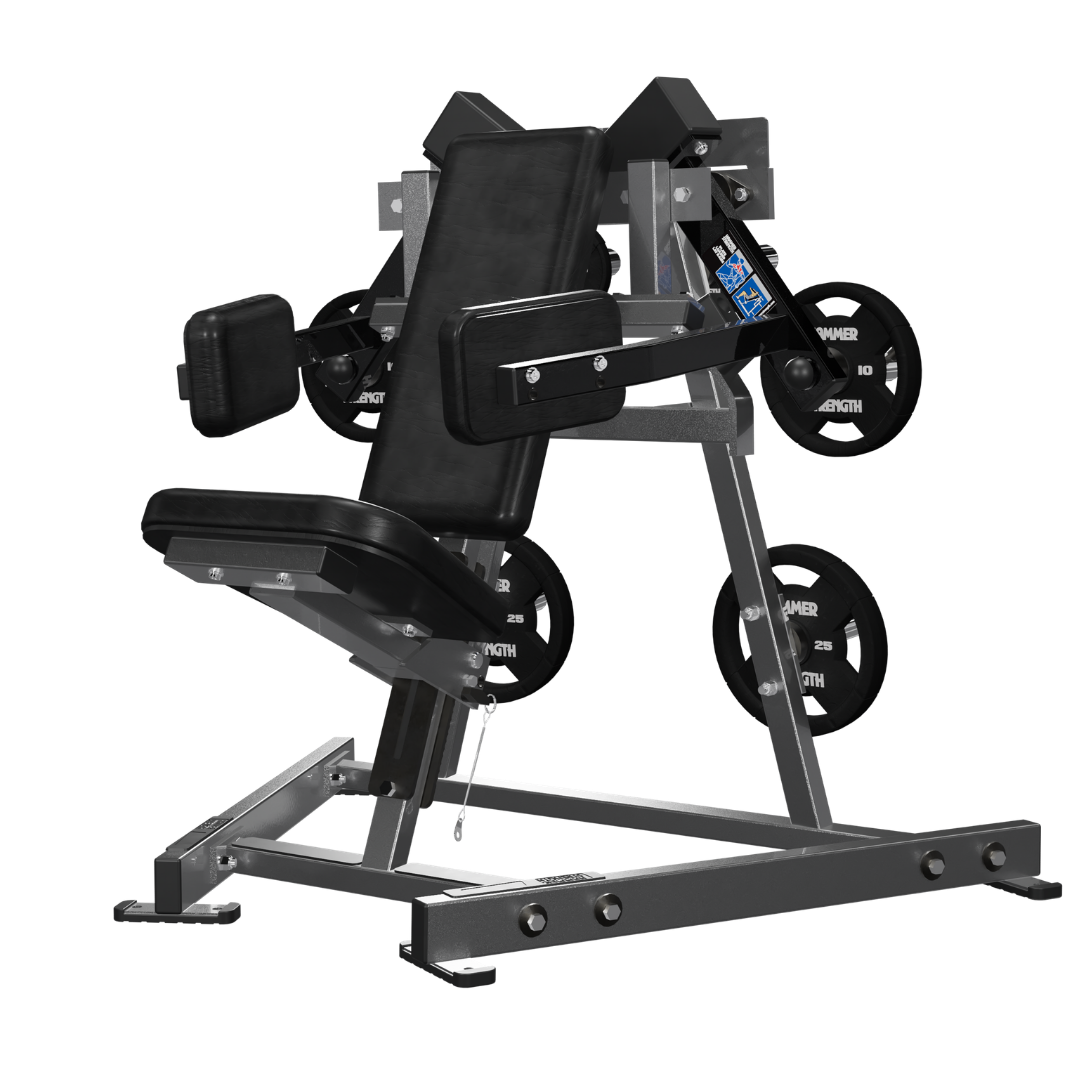
The Lateral Raise machine, sometimes referred to as a deltoid raise machine, primarily targets the medial deltoid, the muscle responsible for shoulder width and lateral movement. It also engages supporting muscles like the anterior and posterior deltoids, the trapezius, and the rotator cuff for stability and control.
Can the Hammer Strength Lateral Raise accommodate users of all sizes?
Yes, the Lateral Raise is designed to accommodate users of all sizes. The adjustable seat and ergonomic elbow pads allow for proper alignment and positioning, ensuring a safe and effective workout for a wide range of body types and heights.
How does the Plate Loaded Lateral Raise compare to using free weights for lateral raises?
The machine offers greater stability and a more controlled range of motion compared to free weights. Its design minimizes the risk of using momentum, ensuring consistent muscle engagement throughout the exercise. While free weights provide more freedom of movement, the Lateral Raise machine is ideal for isolating the shoulders and maintaining proper form.