HAMMER STRENGTH
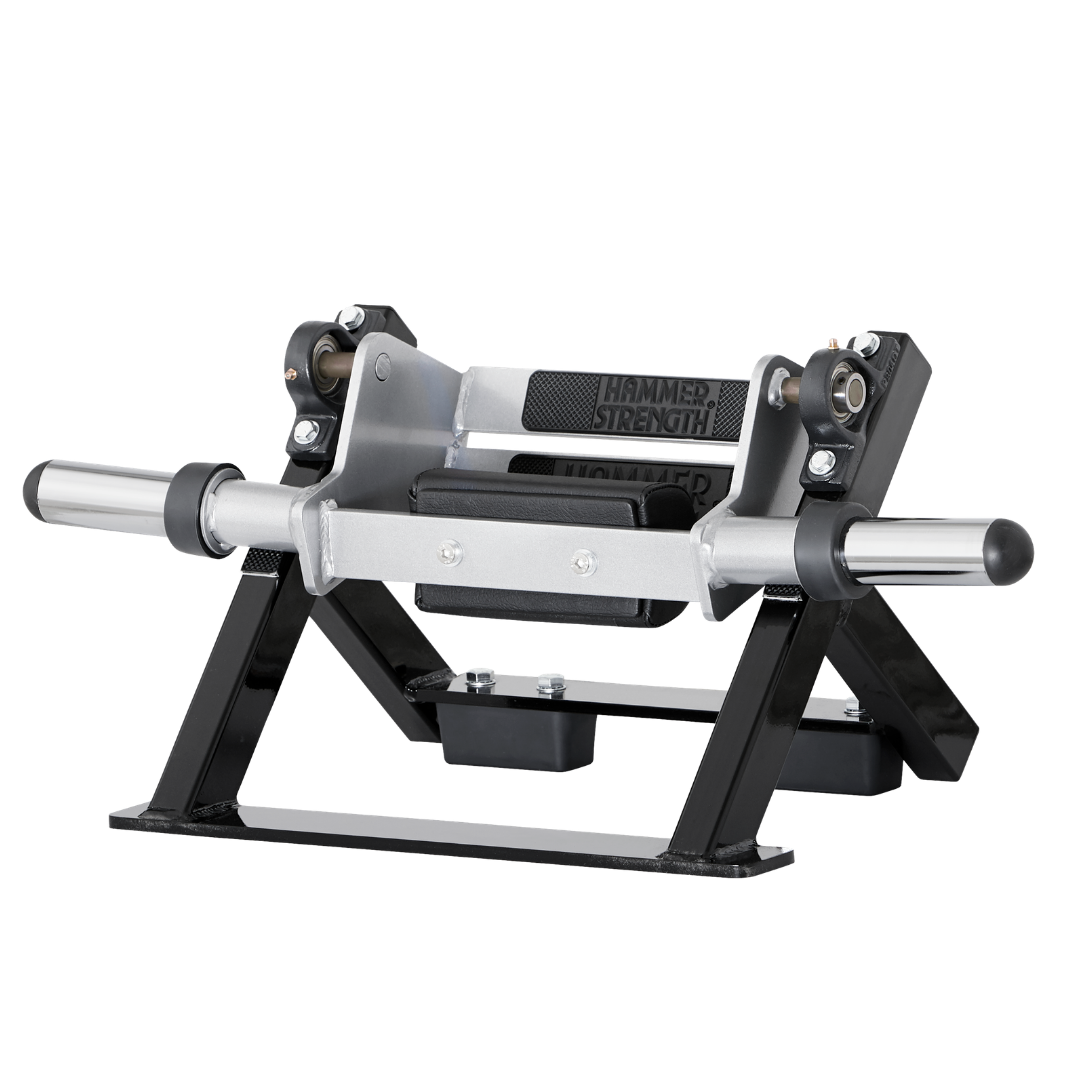
Hammer Strength Plate Loaded Tibia Dorsi-Flexion
The Hammer Strength Iso-Lateral Kneeling Leg Curl is engineered to enhance posterior chain workouts by aligning the knee with the machine’s axis of rotation. This alignment optimizes hamstring activation, thereby improving running, jumping, and lifting form.
Designed to accommodate athletes of all sizes, this machine minimizes back strain, ensuring focused and effective training. It is built to help achieve peak performance where it matters most.
- Dimensions (D x W x H): 40 in x 54 in x 49 in (102 cm x 137 cm x 124 cm)
- Weight: 250 lb (113.4 kg)
KEY FEATURES
Low Profile Design
KEY FEATURES
Dense Upper Foot Pad
KEY FEATURES
Angled Foot Platform
More Than Just Dorsiflexion
Most athletes will train with their foot straight, targeting the tibialis through dorsiflexion. However, the machine’s design goes beyond this—it allows for angling the foot inward or outward to perform inversion and eversion exercises. This helps to develop a more resilient, fully developed lower leg and ankle complex, crucial for stability, injury prevention, and overall performance.
Balanced Strength & Seamless Integration
The Tibia Dorsi-Flexion machine is designed to compliment our Seated Calf Raise and can be positioned right behind it, allowing you to train both the front and back of the lower leg in one efficient setup. Balanced strength starts here.
Specifications
| Dimensions (L x W x H) | 16 x 34 x 14 in (41 x 86 x 36 cm) |
|---|---|
| Product Weight | 52 lb (24 kg) |
| Max Load Capacity | 3 x 10 lb plates (3 x 5 kg plates) |
| Starting Resistance | 3 lb (1.4 kg) |
|---|---|
| Product Code | PL-TIB |
FAQ
Why should athletes train the tibialis anterior?
The tibialis anterior plays a crucial role in deceleration, stability, and overall lower-leg durability. Strengthening it can help reduce the risk of shin splints, improve ankle mobility, and enhance explosive movements like sprinting and jumping.
Can this be used while standing?
Yes. While seated training is ideal for isolating the tibialis, athletes can also use this machine while standing to incorporate more functional, sport-specific movement patterns. Standing dorsiflexion better mimics how the tibialis works in dynamic situations, making it a great option for performance training.
How much weight should I use?
The tibialis is a small but powerful muscle, and light loads go a long way. Most users find that 5s and 10s are more than enough to fatigue the muscle and reap the benefits without unnecessary strain.
Why should I use the tibia machine for inversion and eversion exercises?
Lower-leg strength workouts aren’t just about moving up and down—it’s about control in every direction. The ability to angle the foot inward or outward allows athletes to target the smaller stabilizing muscles around the ankle, improving balance, mobility, and injury resilience.